Which moths do you have?
Clothes moths, carpet moths and pantry moths each need a different approach, and treating the wrong one wastes time and money. Answer a few quick questions and we’ll identify what you’re dealing with, then build you a natural treatment and prevention plan from more than thirty years of wardrobe care expertise.
Identify first, then treat
Most failed moth treatments start with a misdiagnosis. The webbing clothes moth, the case-bearing clothes moth and the pantry moth feed on different things in different places, and where the larvae are feeding decides the right remedy.
Identify
A few quick questions narrow down which moth you’re dealing with and how established the problem is.
Treat naturally
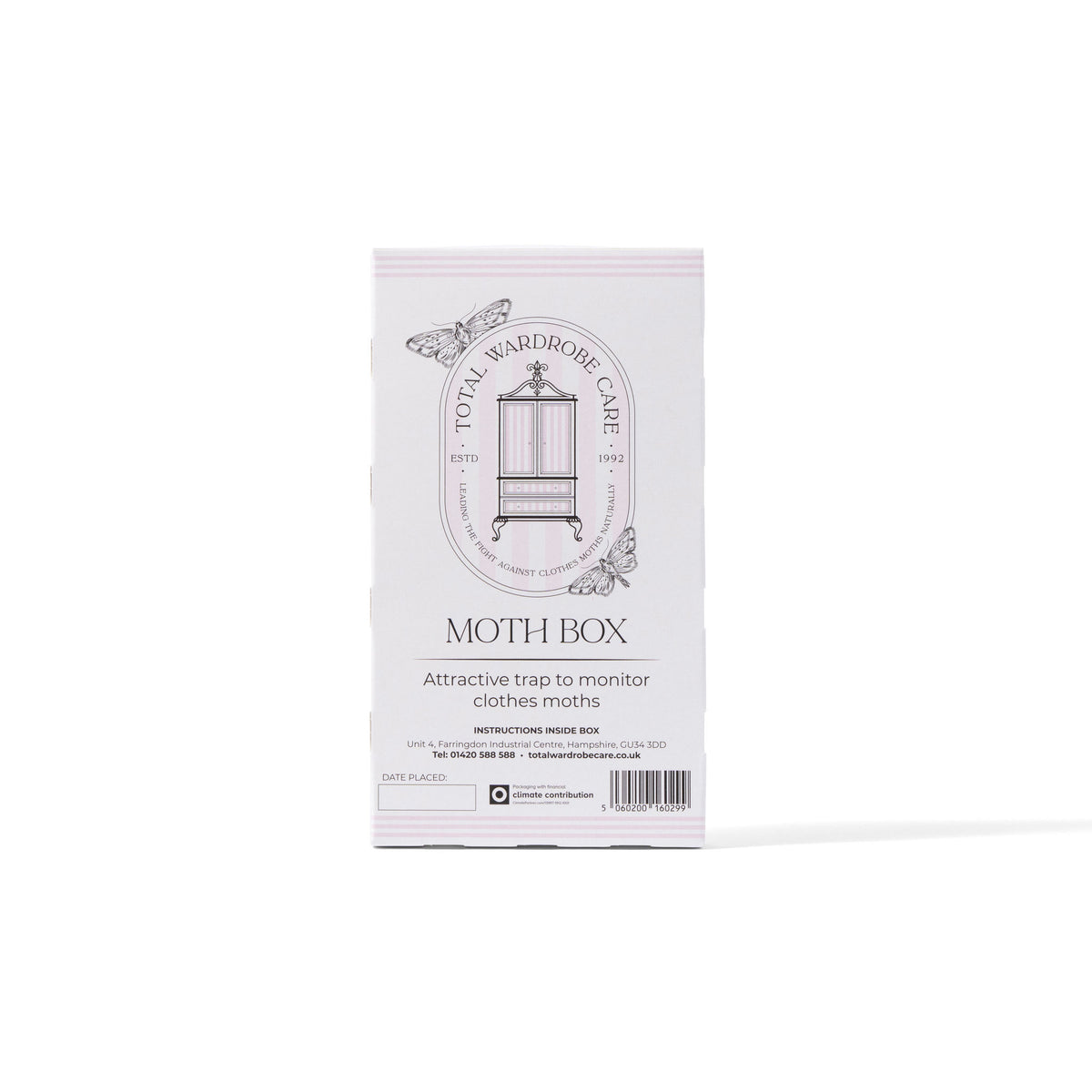
Your plan uses pheromone monitoring and natural, family-safe treatments, never harsh chemicals.
Protect for good
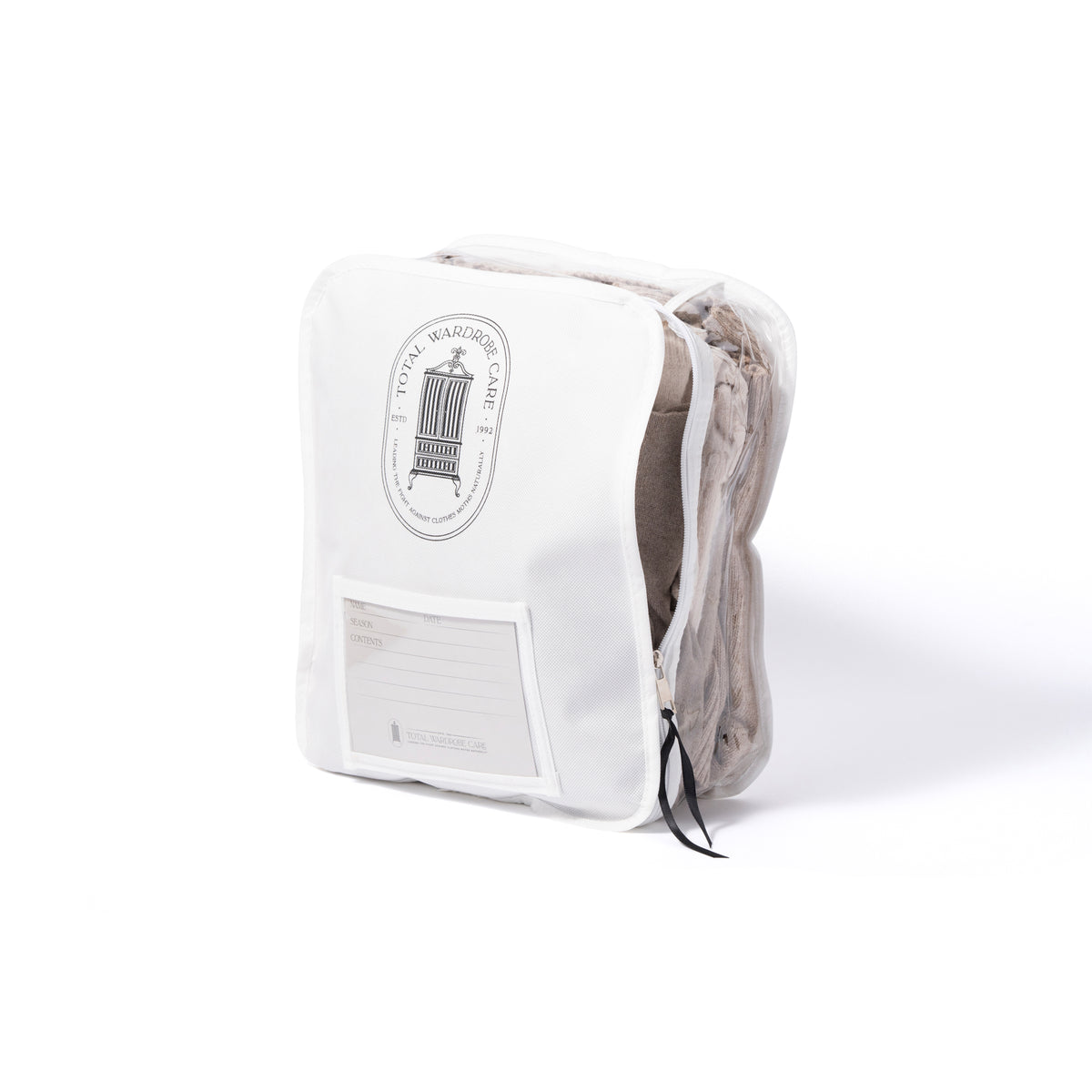
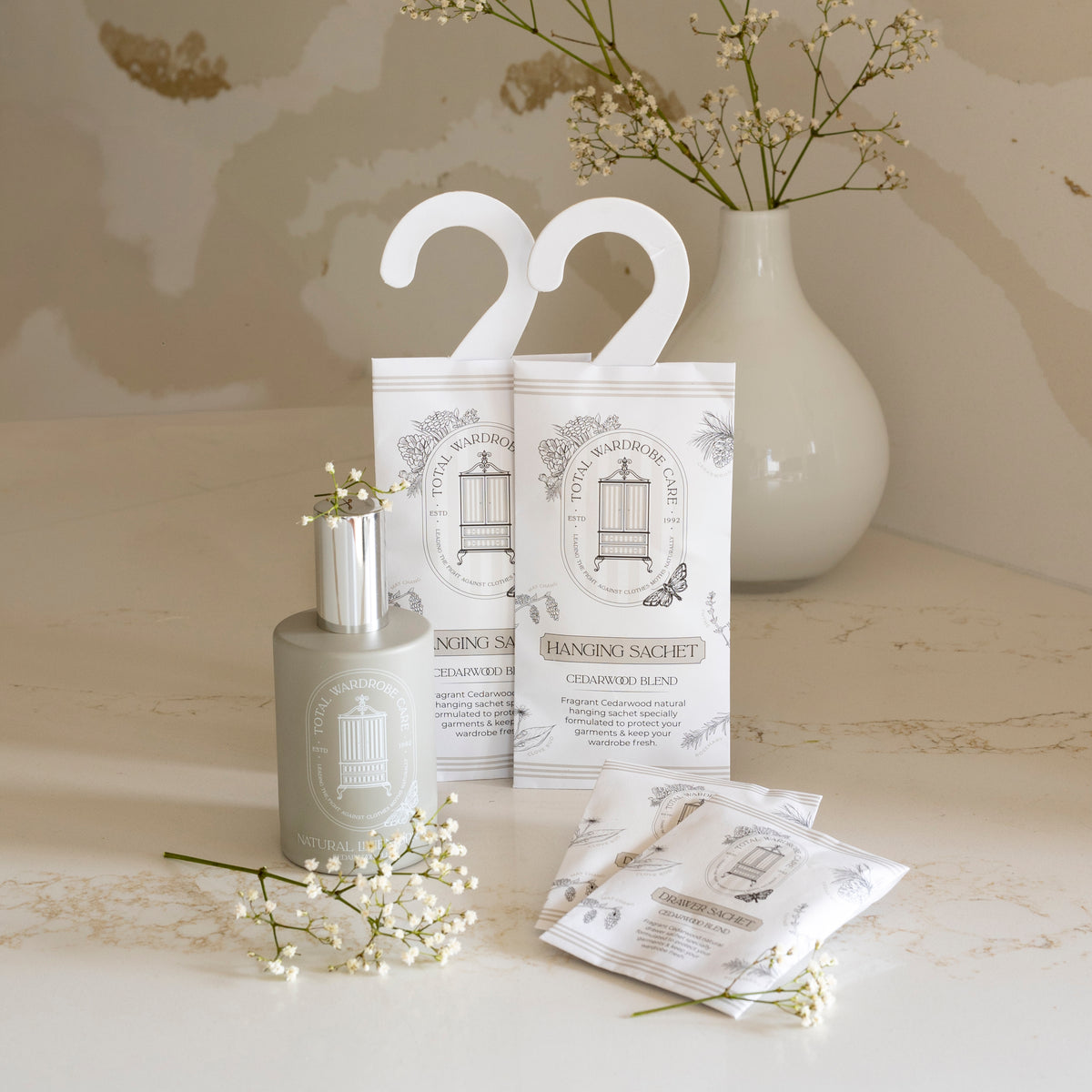
Break the breeding cycle and keep moths away with scented deterrents and proper garment storage.
Moth questions, answered
Three decades of fighting clothes moths naturally; these are the questions we hear most.
Are carpet moths and clothes moths the same thing?
Mostly, yes: the culprits are usually the same two species, the webbing clothes moth (Tineola bisselliella) and the case-bearing clothes moth (Tinea pellionella). “Carpet moth” simply describes where the larvae are feeding. That’s why the treatment principles are shared but the tactics differ: dark wardrobes and drawers call for one approach, skirting boards and the shadowed edges of rugs another. Our guides to clothes moths and carpet moths show you exactly what to look for.
What actually causes the damage, the moths or the larvae?
The larvae. Adult clothes moths don’t eat at all; they exist to breed. The eggs they lay hatch into larvae that feed on keratin in natural fibres: wool, cashmere, silk, fur and feathers. That’s why any serious treatment plan targets the eggs and larvae, not just the adults you can see. Read about the life cycle of a clothes moth.
Do natural moth deterrents really work?
Yes, used correctly. Scents such as may chang, cedarwood and vetivert disrupt the moth’s ability to locate somewhere to lay eggs, and pheromone traps intercept breeding males. What natural deterrents can’t do is kill larvae already in your fibres, which is why we pair deterrents with monitoring and, where needed, a natural chrysanthemum treatment spray.
How long does it take to get rid of a moth infestation?
Expect eight to twelve weeks to fully break the breeding cycle, because eggs laid before you started treating will continue to hatch. Monitoring with a pheromone trap tells you whether numbers are falling. Our step-by-step guide walks through the whole process.
When is moth season in the UK?
Adult clothes moths are most active from April to October, with numbers peaking in warm summer months. Centrally heated homes, however, can support breeding all year round, which is why we recommend keeping monitoring traps out in every season and refreshing deterrents every eight to twelve weeks.
“I haven’t seen any sign of moths since using the products.”
Sophie Conran · Designer