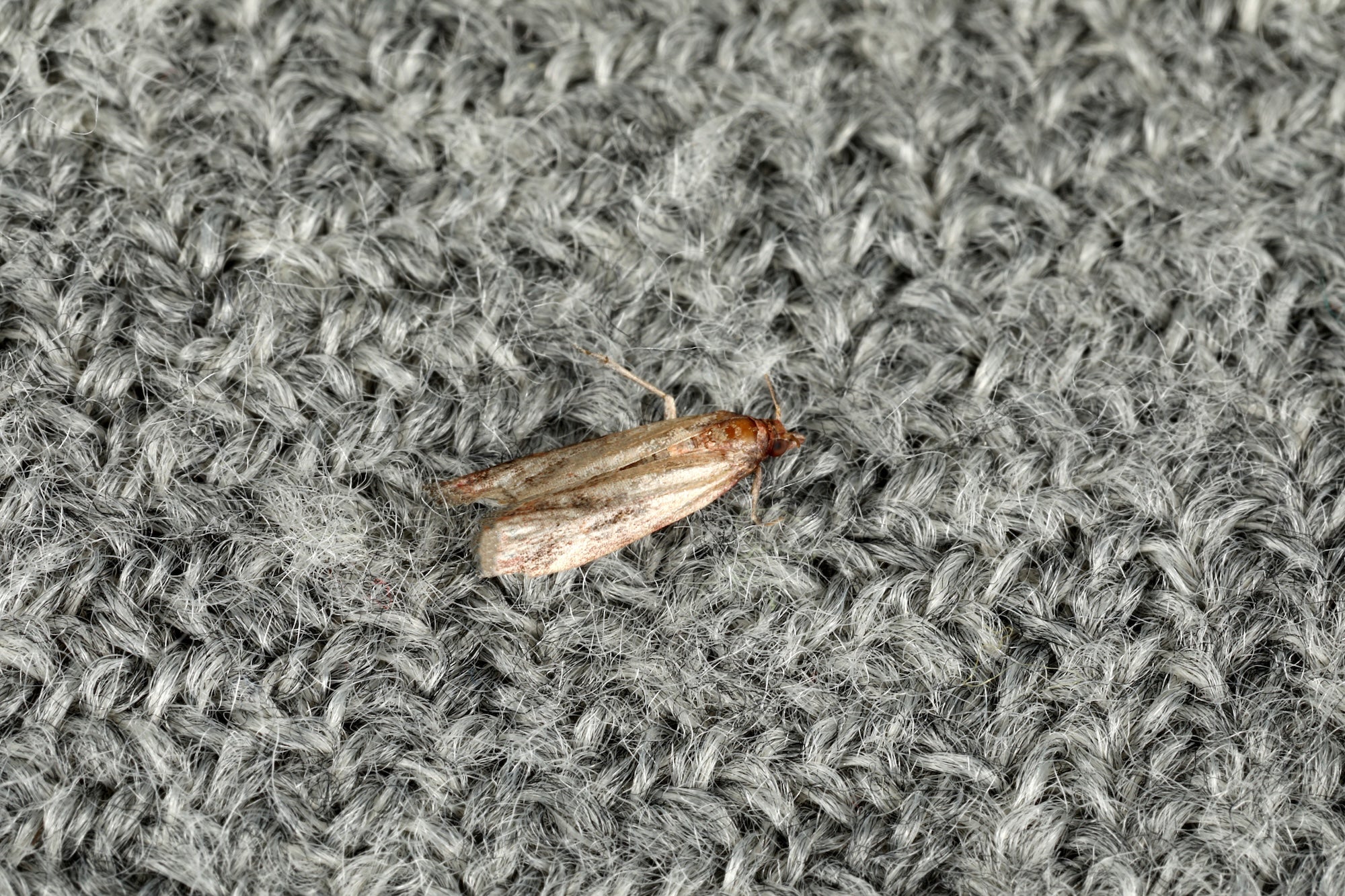

Quick answer: Not every moth you find at home will damage your clothes. Start by looking at where you have spotted it. Wardrobes and drawers can point to clothes moths, while activity along carpet edges or beneath furniture may suggest moths feeding on rugs or carpets. Moths around stored food are more likely to be pantry moths. A larger moth flying near a light may simply have come in from the garden. These clues will help you decide what to look for next.
Our guide explains the signs to look for, from wing colour to the small traces left on fabrics. If you are still unsure, our Moth Identification Quiz can help you work out what you have found and where to begin.
WHICH MOTHS DO YOU HAVE? START HERE
- Small, golden-buff moth, rarely seen flying, found in wardrobes or drawers → common clothes moth
- Similar size, but you've spotted small case-like tubes stuck to fabric rather than just holes → case-bearing clothes moth
- Found on carpets, rugs or under furniture rather than in clothing → carpet moth
- Reddish-brown outer wings, found in the kitchen near dry food → pantry (Indian meal) moth
- Noticeably larger, drawn to lights at night, not near clothing at all → a garden moth that's flown in - harmless to fabric
COMMON CLOTHES MOTH (TINEOLA BISSELLIELLA)

The common clothes moth is one to look out for when checking your wardrobe. Around 1cm long, it has plain golden or buff-coloured wings without obvious markings. Adults tend to stay close to dark, undisturbed places and may scurry rather than fly when disturbed, so you might notice one as you open a drawer.
It is the larvae, not the adult moths, that damage natural fibres such as wool, cashmere, silk, fur and feathers. Irregular holes in stored clothing are a sign worth investigating.
CASE-BEARING CLOTHES MOTH (TINEA PELLIONELLA)

Image credit: Butterfly Conservation
The most useful sign of a case-bearing clothes moth is the small silk case its larvae carry as they move and feed. You may notice these little tubes attached to fabric, as well as holes in the material. The adult has mottled grey-brown wings rather than the plain gold of the common clothes moth.
Although less common in UK homes, it also needs prompt attention to protect your clothes. The same care principles apply, but check that any treatment is suitable for the species you have identified.
CARPET MOTH

The name 'carpet moth' usually describes where the larvae are feeding, rather than a separate species. The same moths that damage clothing can also feed on wool carpets and rugs, particularly beneath furniture or in little-used rooms.
If you have found damage here, the principles of identification and treatment are similar to those for clothes moths, with particular attention to the affected carpet and surrounding areas. Our full guide to getting rid of moths explains the next steps.
PANTRY MOTH (INDIAN MEAL MOTH)

Pantry moths feed on stored food rather than clothing, so they do not call for the same approach as clothes moths. Look for reddish-brown outer wings with a paler band, and activity around kitchen cupboards.
Their larvae feed on dry foods such as flour, cereal, pet food and dried fruit. If you are finding moths in the kitchen but no damage to fabrics, begin by checking your stored food packets.
LARGER MOTHS THAT FLEW IN FROM OUTSIDE

A larger moth near a lit window at night may simply have found its way in from the garden. Its presence alone is not a sign of a clothes moth problem.
Many outdoor moths do not feed on clothing, so look for other signs before deciding whether treatment is needed. If you have seen just one moth and cannot find any fabric damage, there may be nothing to treat.
QUICK COMPARISON
| Feature | Common clothes moth | Case-bearing clothes moth | Carpet moth | Pantry moth | Larger house moths |
|---|---|---|---|---|---|
| Size | ~1cm | ~1cm | ~1cm | ~1cm | Often 2cm+ |
| Colour | Plain gold/buff | Mottled grey-brown | Plain gold/buff | Reddish-brown, banded | Varies, often patterned |
| Found | Wardrobes, drawers | Wardrobes, drawers | Carpets, rugs, under furniture | Kitchen cupboards | Near lights, windows |
| Eats | Wool, silk, cashmere, fur | Wool, silk, cashmere, fur | Wool carpet/rug fibres | Dry food | Nothing indoors |
| Threat to wardrobe | Yes | Yes | Yes | No | No |
FREQUENTLY ASKED QUESTIONS
How can I tell the difference between a clothes moth and a normal moth?
Location is the fastest clue - clothes moths stay close to wardrobes and drawers and rarely fly far, while moths that have come in from outside are usually larger, seen near windows or lights, and not associated with any fabric damage.
Are brown moths in my house dangerous?
Not dangerous to you, but worth identifying - a small brown moth near stored food is likely a pantry moth (harmless to clothes), while mottled grey-brown moths near your wardrobe could be case-bearing clothes moths (which do damage fabric).
Do all moths damage clothes?
No - of the moth species commonly seen in UK homes, only clothes moths and case-bearing clothes moths feed on fabric. Pantry moths and larger moths that fly in from outside pose no risk to your wardrobe.
What do I do once I've identified a clothes or carpet moth problem?
Head to our full guide on how to get rid of moths for the complete step-by-step treatment process.